Recently updated on February 18th, 2026
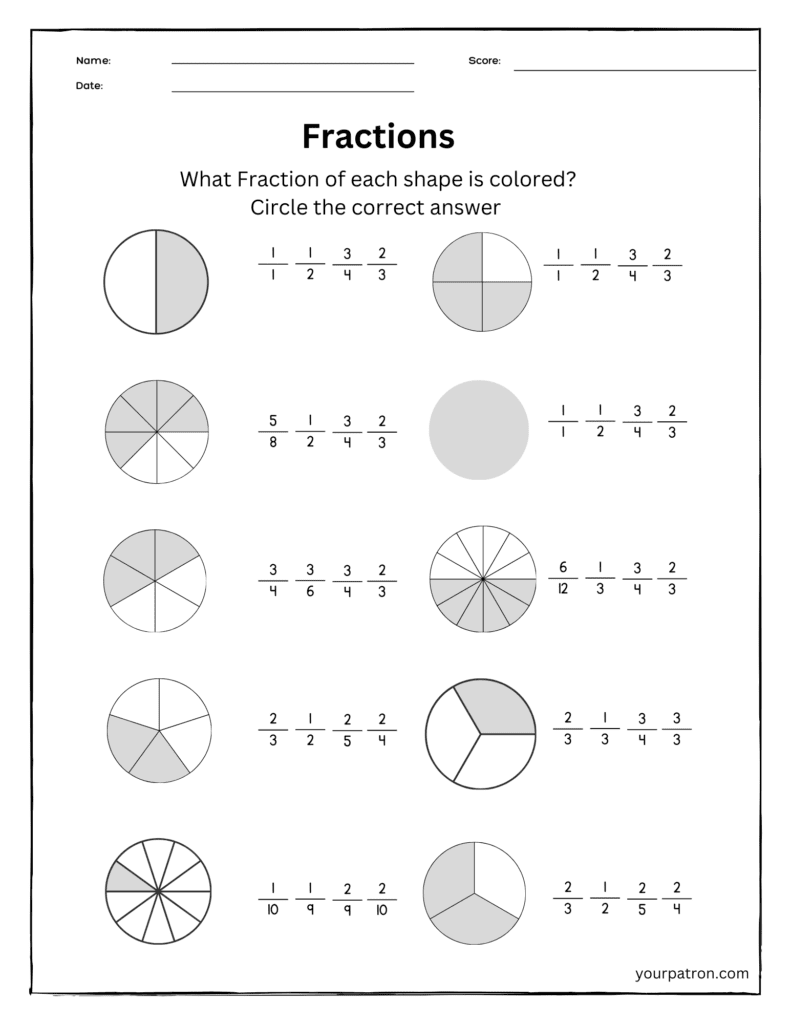
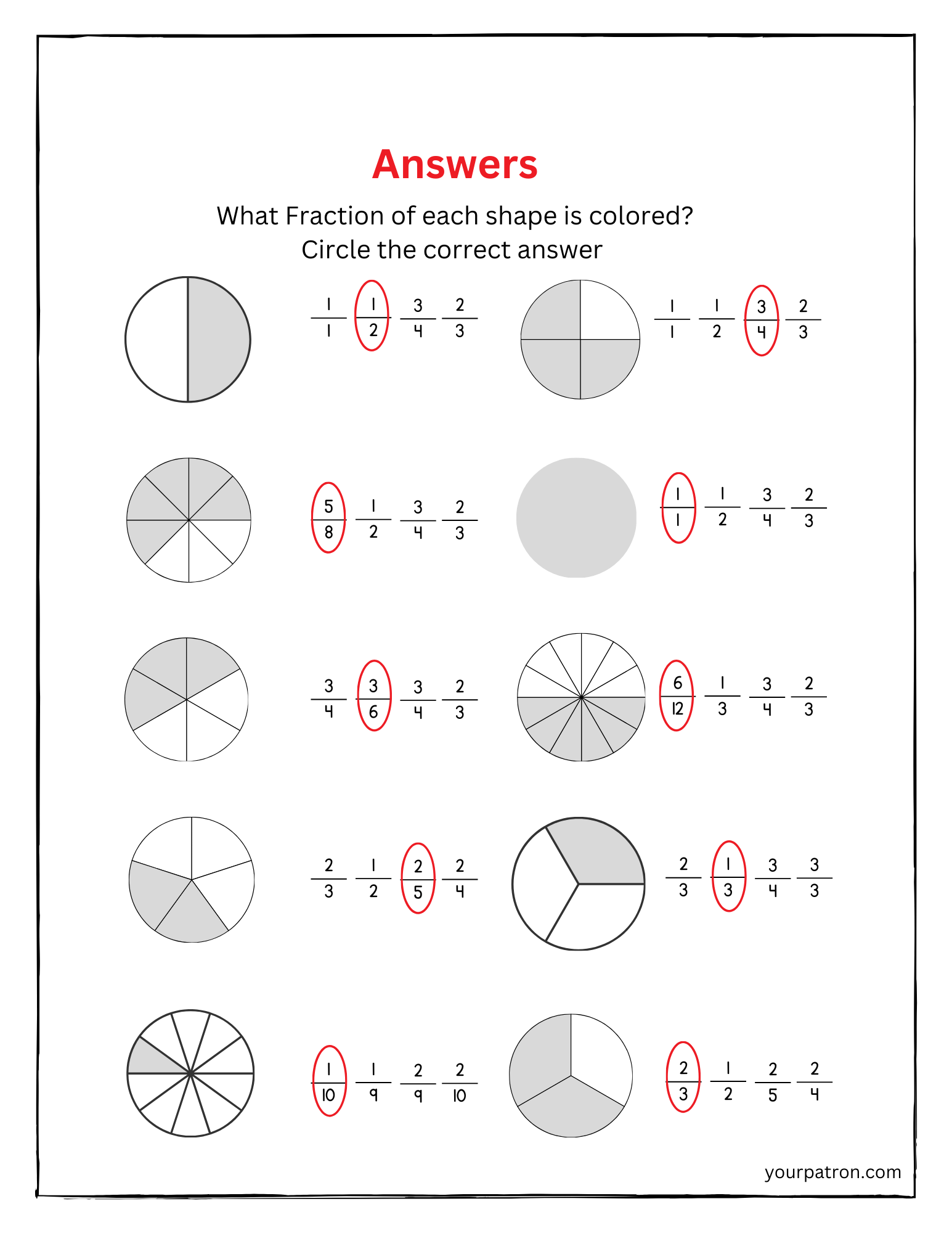
Fractions may seem like an advanced math concept, but introducing fraction for Grade 1 in a simple and visual way helps children develop strong number sense early on. In Grade 1, students begin learning about equal parts, halves, and simple visual fractions. With structured and engaging worksheets, young learners can understand fractions with confidence.
As a teacher who personally creates worksheets, I design fraction activities that are clear, age-appropriate, and focused on building conceptual understanding rather than memorization.
Table of Contents
ToggleWhy Teaching Fraction for Grade 1 Is Important
Early exposure to fractions helps students understand how numbers work beyond whole numbers. When children learn that shapes and objects can be divided into equal parts, they begin developing logical reasoning and spatial awareness.
Educational research highlights the importance of early math foundations in building long-term success in mathematics (National Council of Teachers of Mathematics – NCTM). Understanding equal parts in Grade 1 prepares students for more advanced fraction operations in later grades.
By practicing fraction for Grade 1, students learn to:
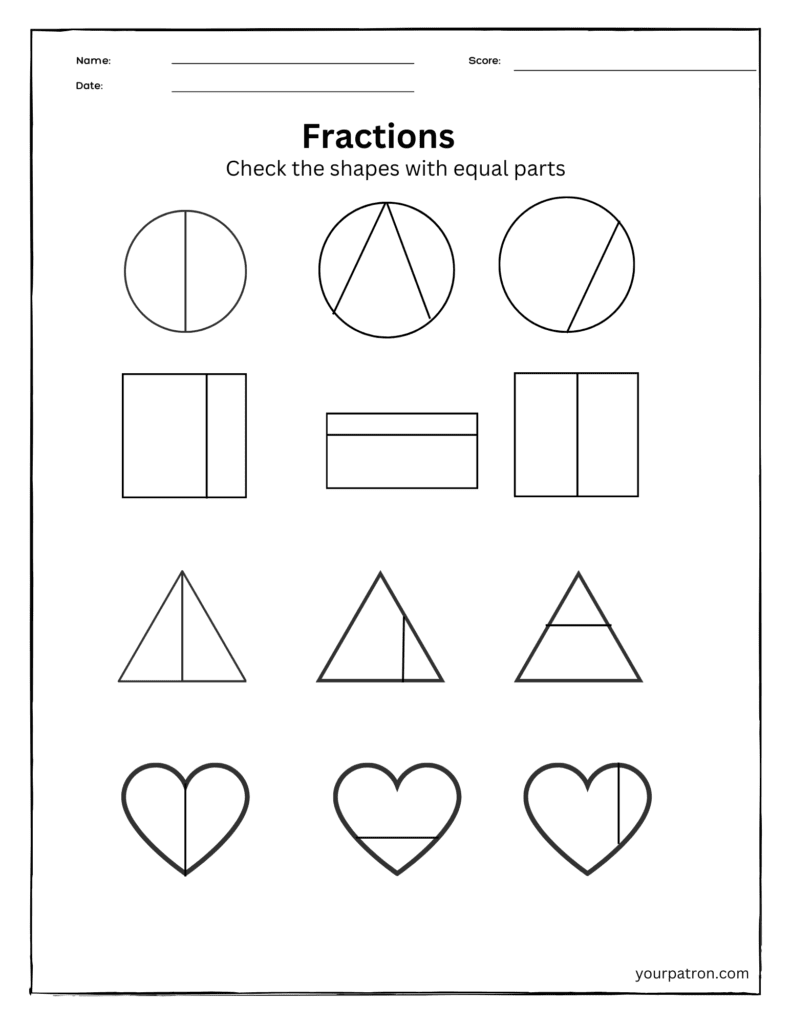
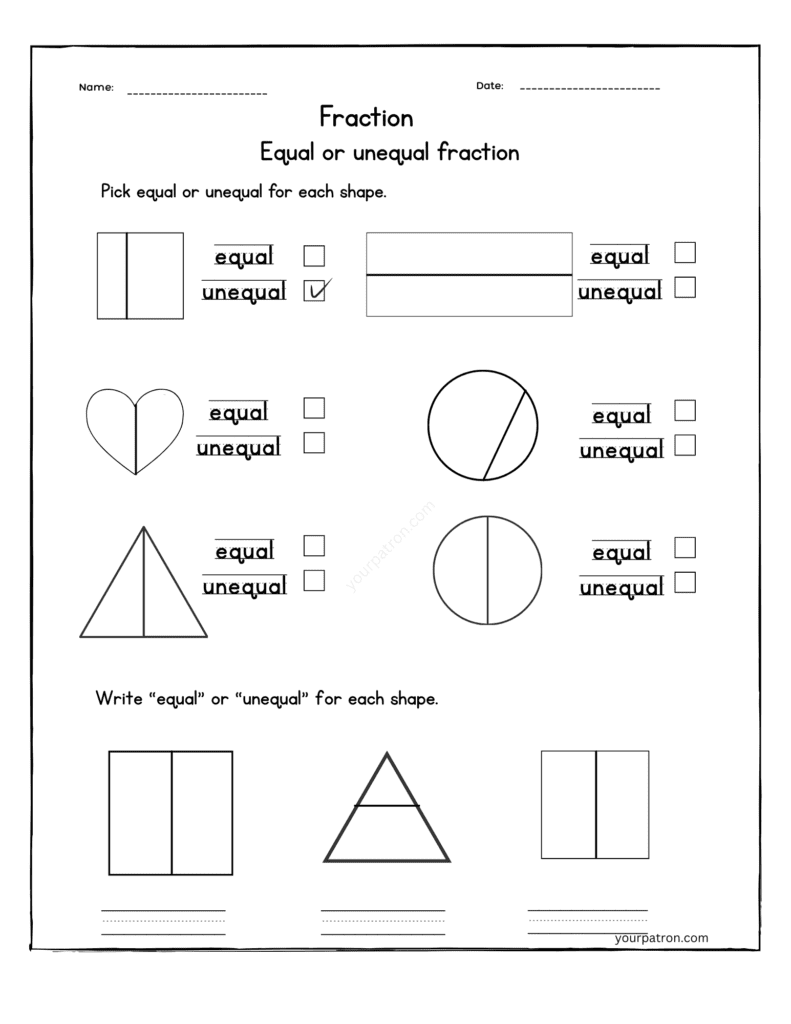
Identify equal and unequal parts
Recognize halves
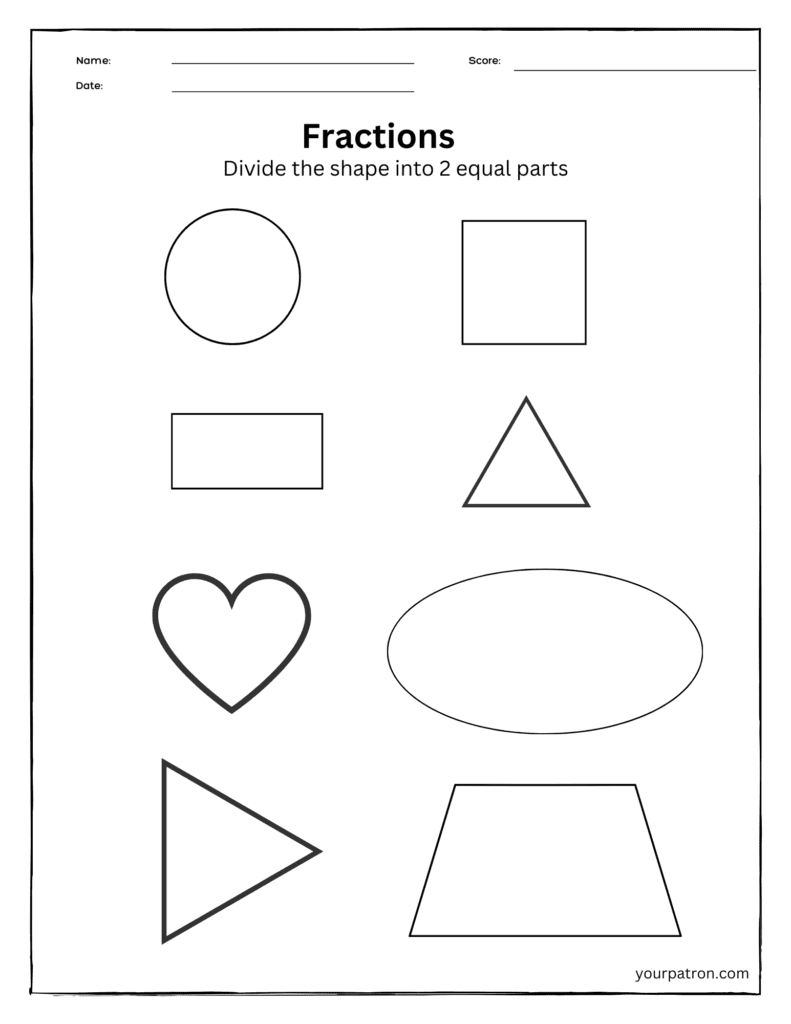
Divide shapes into two equal parts
Understand sharing concepts
Build visual reasoning skills
What Grade 1 Students Learn About Fractions
At this level, fraction learning is very basic and highly visual. My fraction for Grade 1 worksheets focus on concrete examples and real-life connections.
Students practice:
1. Identifying Equal Parts
Children look at shapes divided into sections and determine whether the parts are equal.
2. Understanding Halves
Students color one half of a shape or circle the half that is shaded.
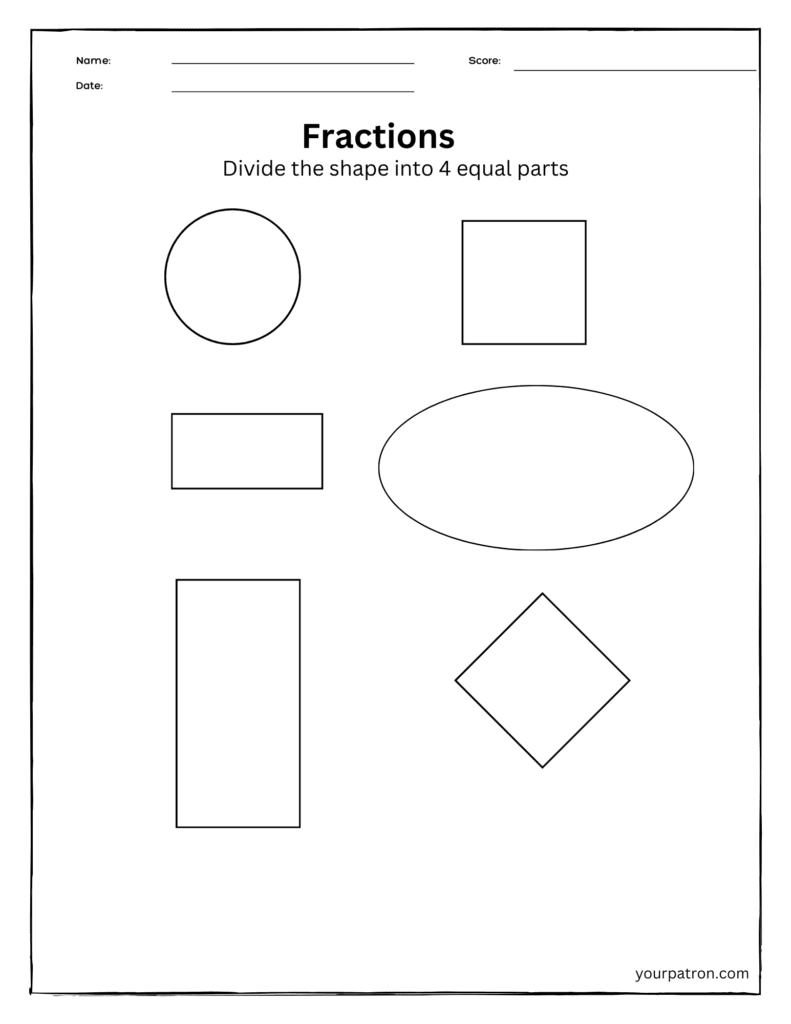
3. Dividing Shapes into Two Equal Parts
Students draw a line to split a shape into two equal sections.
4. Real-Life Sharing Scenarios
Worksheets include examples like dividing a pizza, apple, or sandwich into two equal parts.
These activities help students understand fractions visually before introducing fraction symbols.
Features of My Fraction for Grade 1 Worksheets
Since I personally design these worksheets, I focus on clarity and engagement. Each worksheet is structured to help students build confidence step by step.
My worksheets include:
Large, clear shapes for coloring
Simple instructions for independent work
Minimal distractions for better focus
Progressive skill development
Printable classroom-friendly layouts
These worksheets are ideal for math centers, homework, revision, and homeschooling.
Teaching Tips for Fraction Worksheets
To get the most from your fraction for Grade 1 worksheets, combine paper practice with hands-on activities.
Try these ideas:
Cut paper circles to show halves
Share real snacks into equal parts
Use playdough to divide into two equal pieces
Ask, “Are these parts equal?” during daily activities
When students connect fractions to real-world sharing, learning becomes meaningful and memorable.
Why Teacher-Created Worksheets Matter
Teacher-created worksheets are designed with classroom challenges in mind. I understand that Grade 1 students need visual, hands-on learning experiences. That’s why my fraction for Grade 1 worksheets focus on equal parts first, ensuring students master the concept before moving forward.
Parents and teachers can trust that these worksheets are developmentally appropriate and aligned with early elementary math expectations.
Conclusion
Introducing fraction for Grade 1 through engaging and structured worksheets builds strong math foundations. By focusing on equal parts and simple visual activities, students gain confidence and develop essential reasoning skills.
Whether used at home or in the classroom, these worksheets make learning fractions simple, interactive, and enjoyable. Start early, build confidence, and support your child’s long-term math success.