Recently updated on February 20th, 2026
Understanding how numbers are built is one of the most important early math skills. Before students can confidently solve addition and subtraction problems, they must understand how numbers combine to form larger numbers. That’s where Composing Numbers Worksheets become an essential learning tool.
As an educator who personally creates worksheets for young learners, I design composing number activities that are simple, structured, and developmentally appropriate. These worksheets help students develop number sense while building confidence in foundational math skills.
Table of Contents
ToggleWhat Does Composing Numbers Mean?
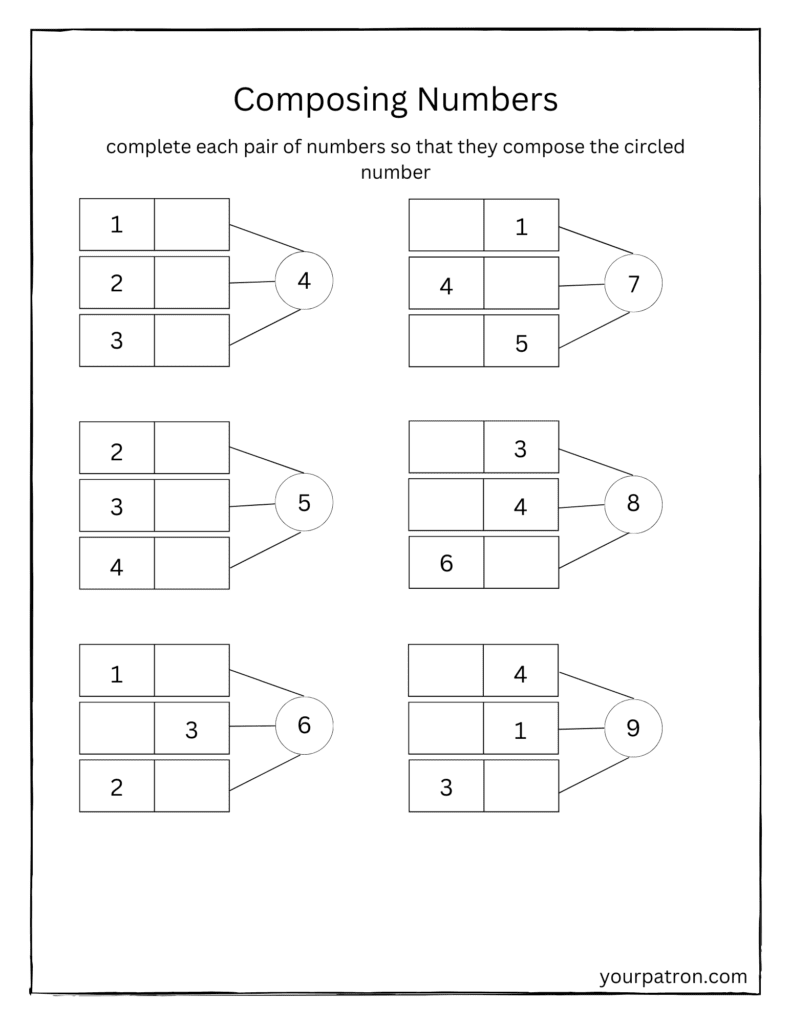
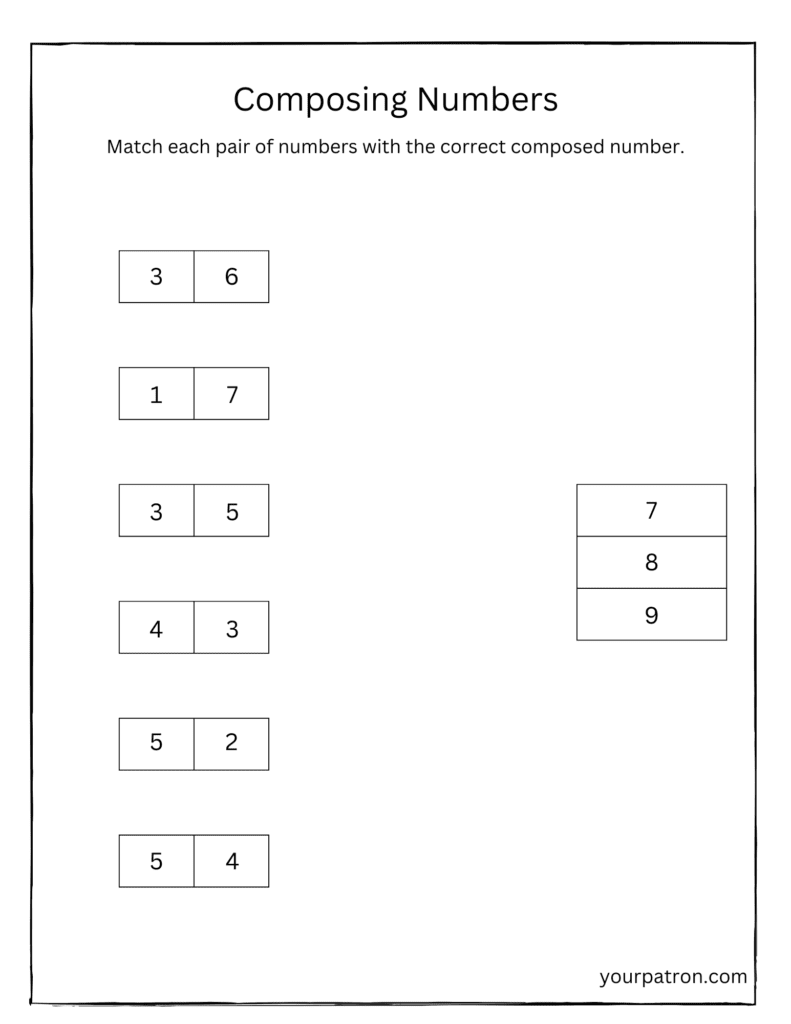
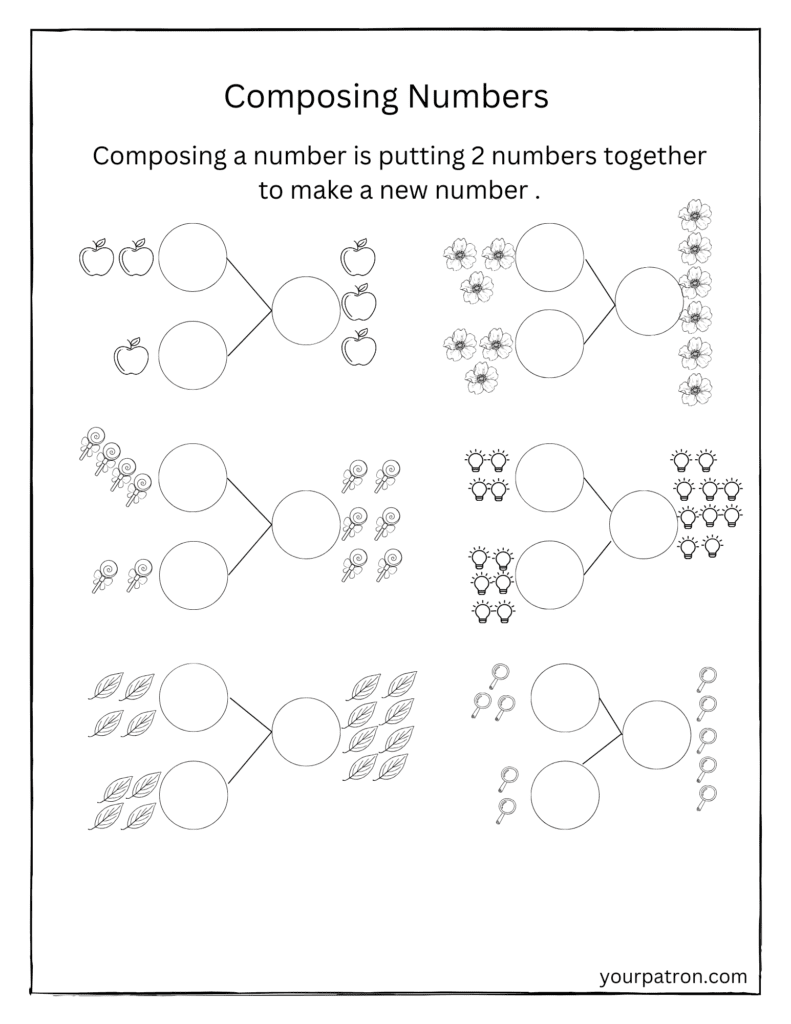
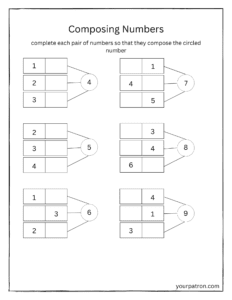
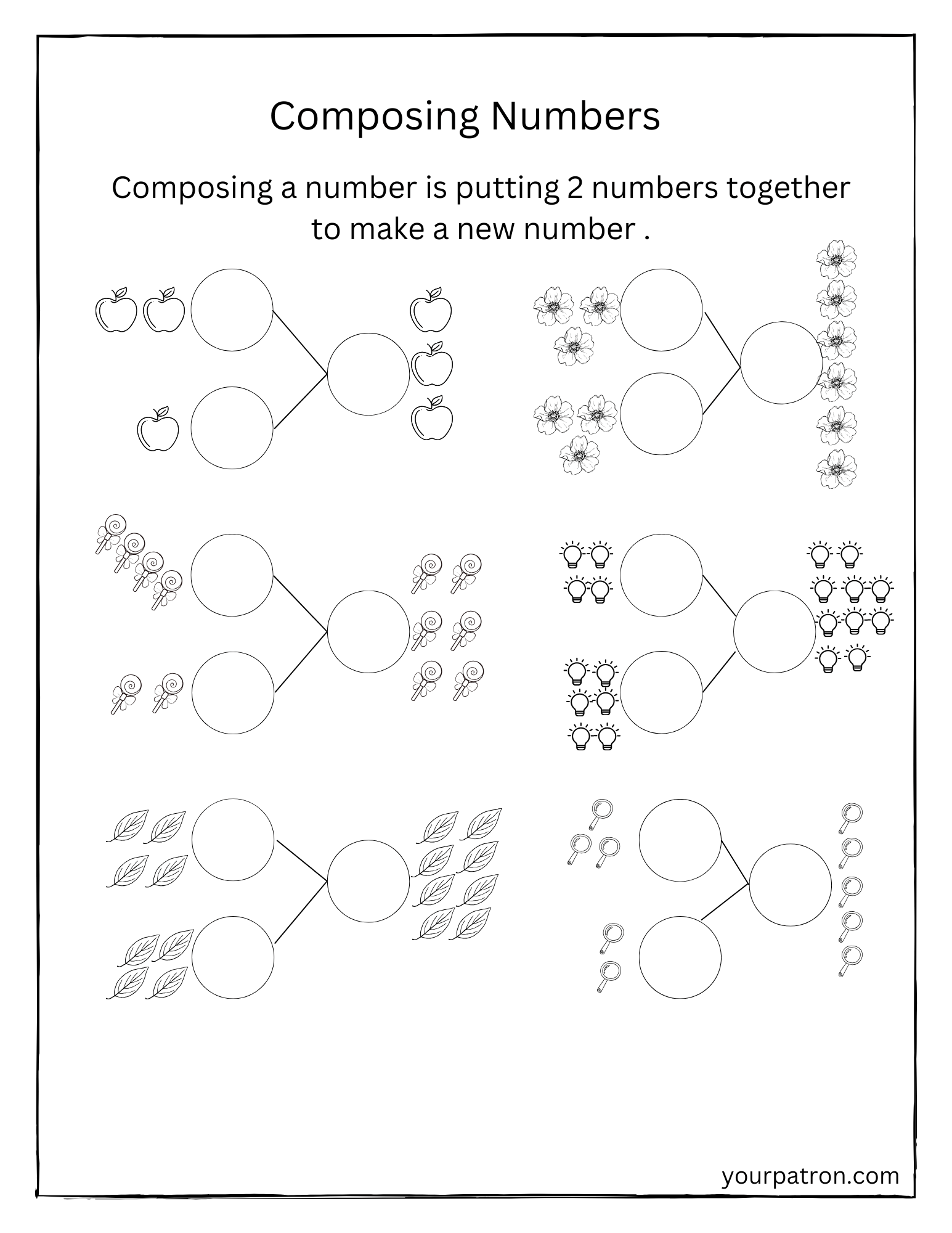
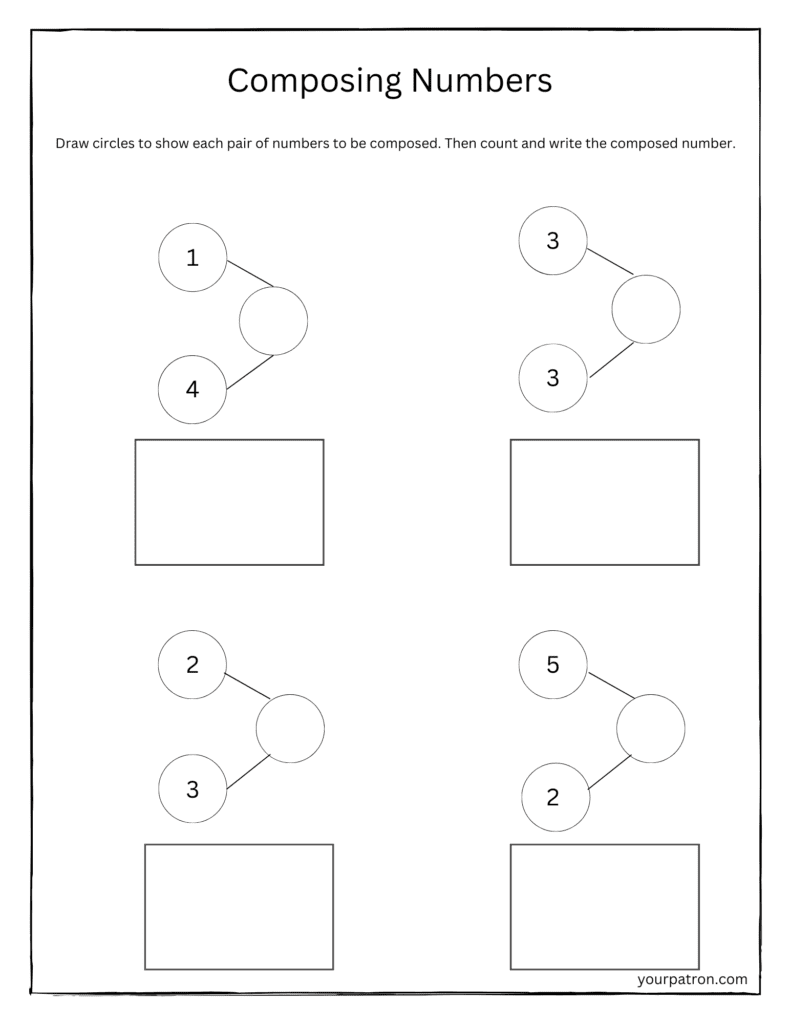
Composing numbers means putting smaller numbers together to make a larger number. For example, when students combine 4 and 3, they compose the number 7. This concept helps children understand how addition works and how numbers are related to each other.
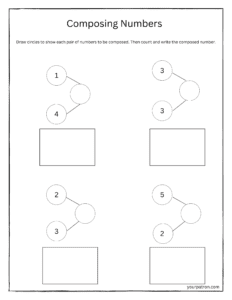
Using Composing Numbers Worksheets, students visually and numerically practice combining parts to form a whole. This strengthens their understanding of number relationships and prepares them for more advanced math concepts.
Why Composing Numbers Is Important
Learning to compose numbers supports long-term mathematical success. When children understand that numbers can be built from smaller parts, they develop flexibility in thinking and stronger problem-solving skills. Educational research highlights the importance of early number sense development in building foundational math skills that support later learning.
Here are some key benefits of practicing with Composing Numbers Worksheets:
Builds Strong Addition Skills – Students understand how numbers combine rather than memorizing facts.
Strengthens Number Sense – Children see how numbers relate to one another.
Supports Place Value Concepts – Composing numbers lays the foundation for understanding tens and ones.
Improves Mental Math – Students learn to break apart and combine numbers quickly.
With regular practice, students gain confidence in basic math operations.
What Students Practice in Composing Numbers Worksheets
My worksheets are carefully designed to move from simple to more challenging tasks. Students start by composing numbers within 10 and gradually increase complexity.
Common activities include:
1. Number Bonds
Students combine two parts to complete a whole number.
2. Part-Part-Whole Models
Children fill in missing numbers to show how parts combine.
3. Addition Sentence Writing
Students write equations such as 5 + 2 = 7 to represent composed numbers.
4. Using Visual Models
Counters, cubes, ten frames, or pictures help students physically see how numbers combine.
5. Multiple Ways to Compose a Number
Students explore different combinations that create the same total (for example, 6 can be 4 + 2 or 3 + 3).
These activities ensure deep understanding instead of surface-level memorization.
Features of My Composing Numbers Worksheets
Since I personally create these worksheets, they are designed with young learners in mind. I focus on clarity, engagement, and skill progression.
My worksheets include:
Clear and simple instructions
Visual supports for better understanding
Gradual skill development
Print-friendly formats
Engaging layouts suitable for classroom or home use
These worksheets work well for math centers, homework, small group instruction, and review sessions.
Teaching Tips for Composing Numbers
To maximize learning with Composing Numbers Worksheets, combine worksheet practice with hands-on activities.
Try these ideas:
Use counting cubes to physically combine numbers.
Have students show numbers on ten frames.
Ask, “How many ways can you make 8?”
Practice quick composing activities during math warm-ups.
Hands-on learning strengthens understanding and retention.
Why Choose Teacher-Created Worksheets?
Teacher-created worksheets are developed with real classroom challenges in mind. I understand that students often need repeated visual practice before mastering number composition. That’s why my Composing Numbers Worksheets focus on step-by-step instruction and meaningful practice.
Parents and teachers can trust that these worksheets align with early elementary math expectations and build a strong foundation for future learning.
Conclusion
Composing numbers is a critical early math skill that prepares students for addition, subtraction, and place value concepts. With structured and engaging Composing Numbers Worksheets, children develop strong number sense and build lasting math confidence.
Whether used in the classroom or at home, these worksheets provide the support young learners need to succeed in their math journey.