
Earth’s System
Grade 4 Earth System science
The Earth has four main systems, also called “spheres,” that work together to support life. These are:
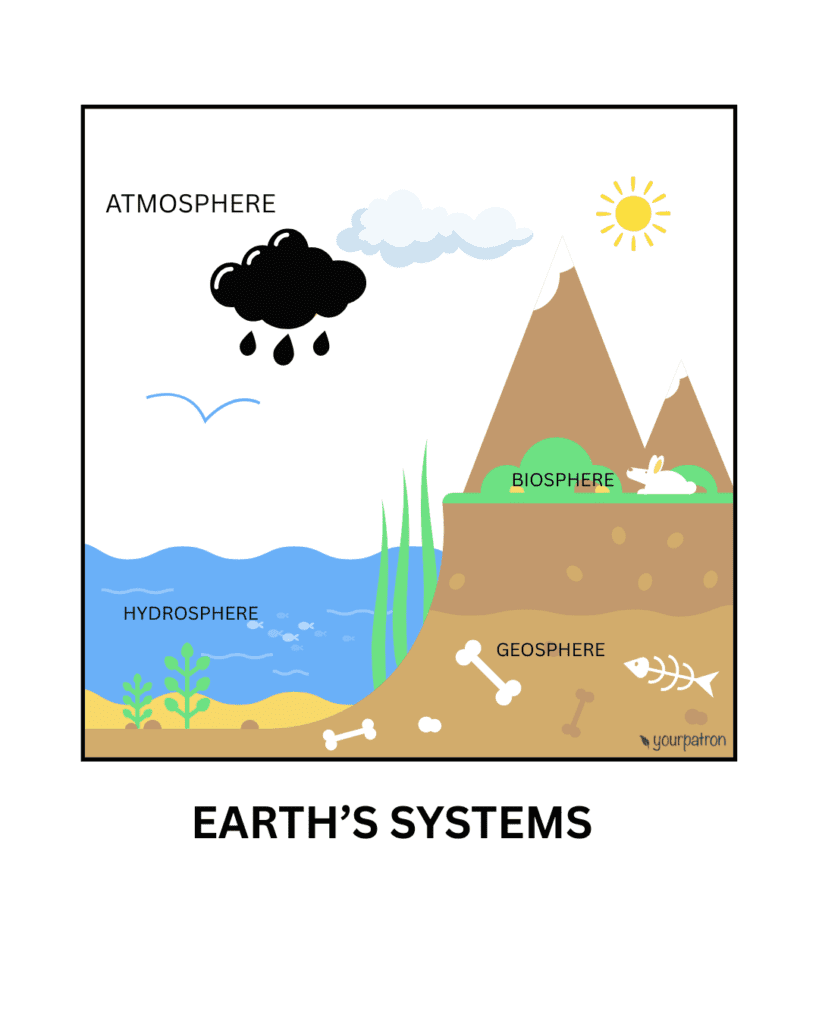 1. Atmosphere
- Definition: The atmosphere is the layer of gases surrounding the Earth.
- Importance: It provides oxygen for breathing, carbon dioxide for plants, and protects us from harmful solar radiation. It also plays a key role in weather and climate.
- Components: Includes gases like nitrogen, oxygen, carbon dioxide, and water vapour.
2. Hydrosphere
- Definition: This system includes all the water on Earth, such as oceans, rivers, lakes, glaciers, and underground water.
- Importance: Water is essential for life, helps regulate the Earth’s temperature, and supports ecosystems.
- Forms: Water exists in three states—solid (ice), liquid (water), and gas (water vapour).
3. Geosphere
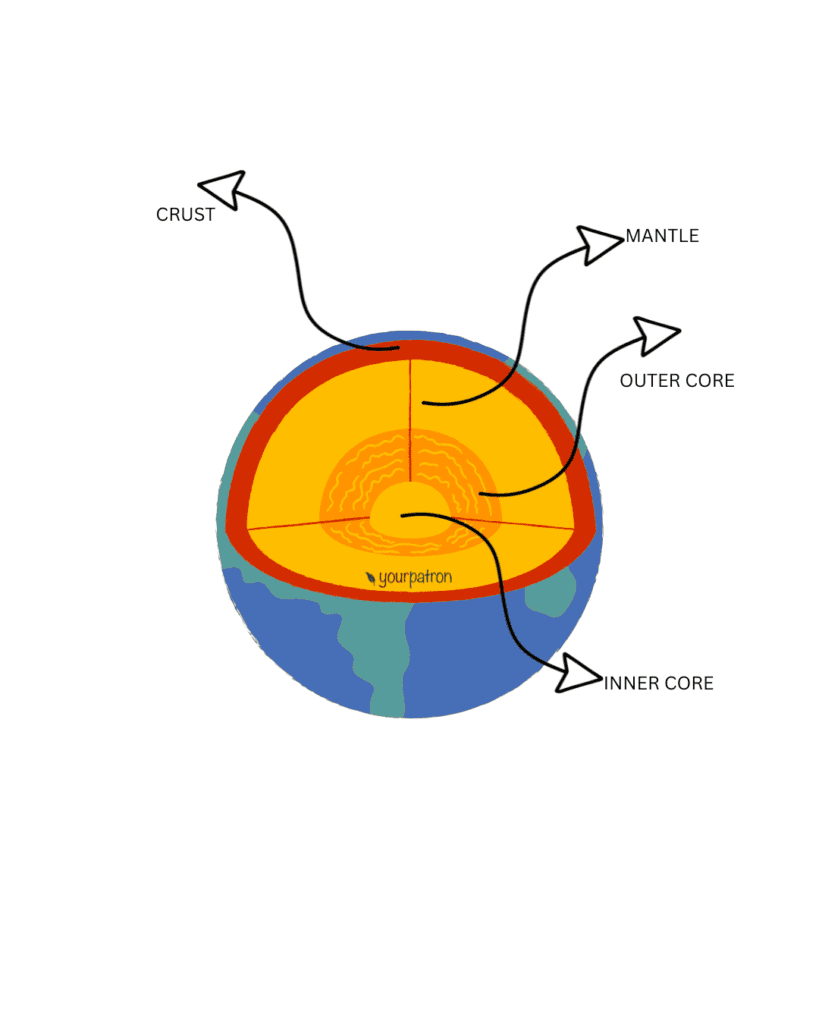
- Definition: The geosphere includes the solid parts of Earth, like rocks, soil, and the Earth’s interior (crust, mantle, core).
- Structure: Divided into layers – crust (outer layer), mantle (middle layer), and core (inner layer).
 4. Biosphere
- Definition: The biosphere consists of all living things on Earth, including plants, animals, and microorganisms.
- Importance: It interacts with the other spheres to support life. For example, plants (biosphere) use sunlight (atmosphere) and water (hydrosphere) to grow in soil (geosphere).
Interactions Between Systems
- Rain (hydrosphere) falls on land (geosphere), providing water for plants (biosphere).
- Volcanoes (geosphere) release gases into the atmosphere, affecting air quality and climate.
- Animals (biosphere) breathe oxygen from the atmosphere and drink water from the hydrosphere.
Connections Between Human Activity and Earth’s Systems
Human activities significantly impact Earth’s four main systems. These interactions can be beneficial or harmful depending on the activity. Here are some examples:
1. Atmosphere
- Impact:
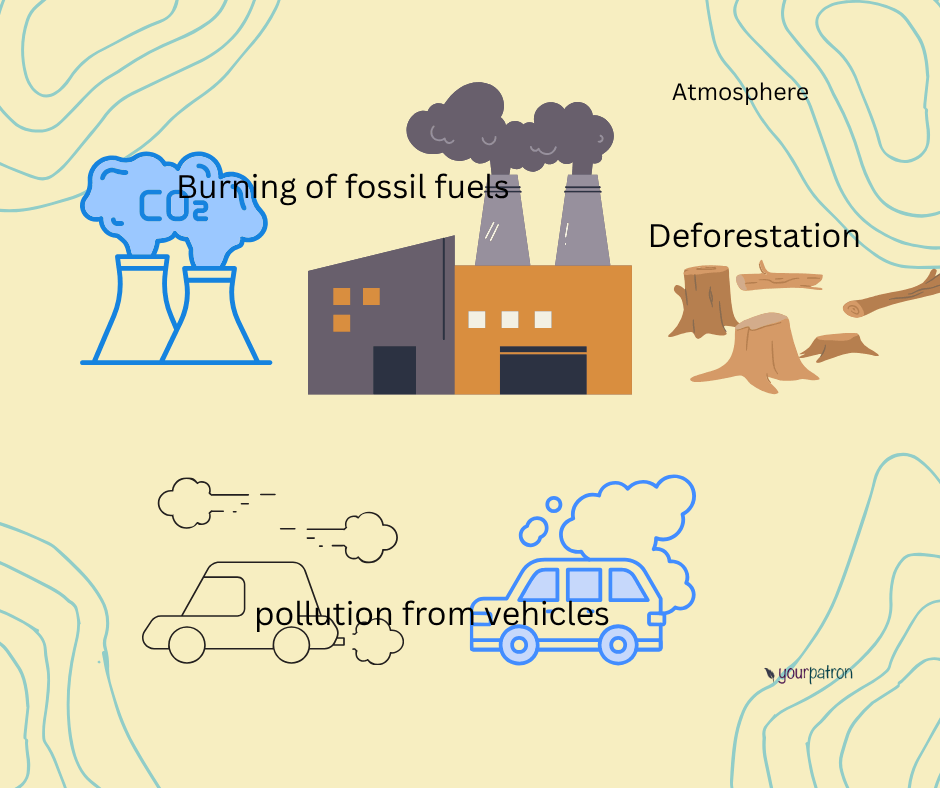
- Burning fossil fuels (like coal, oil, and gas) releases carbon dioxide and other greenhouse gases, contributing to global warming and climate change.
- Air pollution from factories and vehicles can harm living organisms and degrade air quality.
- Connection:
- Humans depend on the atmosphere for oxygen and weather regulation, but activities like deforestation and industrial emissions upset its balance.
2.Hydrosphere
- Impact:
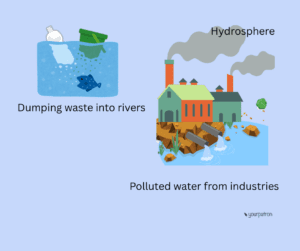
- Dumping waste into rivers and oceans pollutes water bodies, harming marine life.
- Overuse of water for agriculture and industries leads to water scarcity.
- Climate change causes ice caps to melt, raising sea levels and altering the water cycle.
- Connection:
- Humans need clean water for drinking, farming, and sanitation, but pollution and overuse strain this system.
3. Geosphere
- Impact:
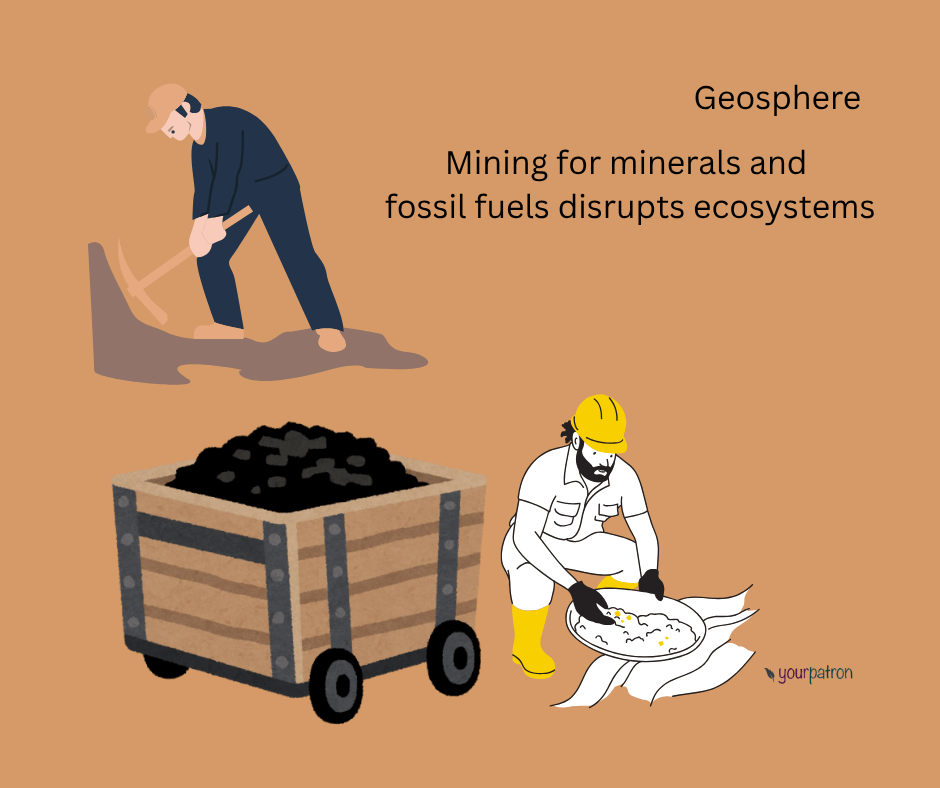
- Mining for minerals and fossil fuels disrupts ecosystems and can cause soil erosion.
- Urbanization (building cities and roads) changes the landscape and destroys habitats.
- Farming can degrade soil quality if not managed sustainably.
- Connection:
- Humans rely on the geosphere for resources like soil for farming and minerals for construction, but poor management can harm ecosystems and cause natural disasters like landslides.
4. Biosphere
- Impact:
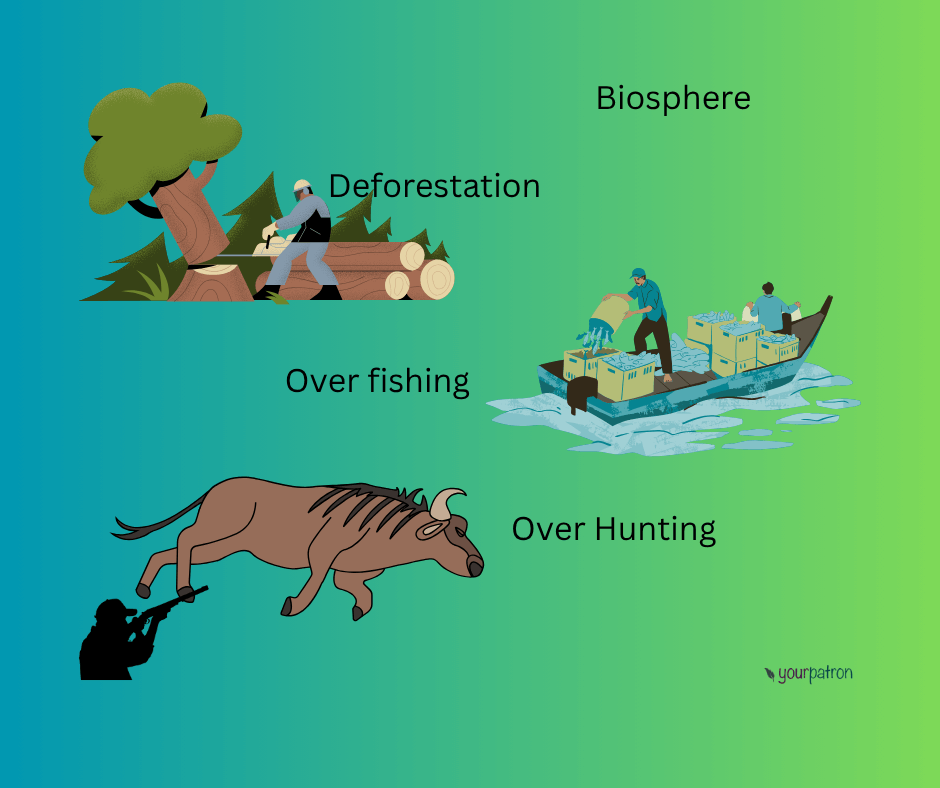
- Deforestation reduces biodiversity by destroying habitats for plants and animals.
- Overfishing and hunting lead to the extinction of species.
- Introducing non-native species can disrupt local ecosystems.
- Connection:
- Humans are part of the biosphere and depend on it for food, medicine, and raw materials. Damaging the biosphere threatens human survival and the balance of ecosystems.
Examples of Combined Interactions
- Industrialization: Factories release pollutants (atmosphere), use water for production (hydrosphere), extract minerals (geosphere), and harm ecosystems (biosphere).
- Climate Change: Increased greenhouse gases (atmosphere) melt glaciers (hydrosphere), affect agriculture (geosphere), and endanger species (biosphere).
- Deforestation: Cutting down trees reduces oxygen levels (atmosphere), increases soil erosion (geosphere), affects water retention (hydrosphere), and destroys animal habitats (biosphere).
The Importance of Sunlight and Warmth for Organisms
Sunlight and warmth are essential for the survival and growth of many organisms. The amount of sunlight and warmth in a particular area determines the types of organisms that can live there and how they interact within their environment.
1. Plants (Producers)
- Importance:
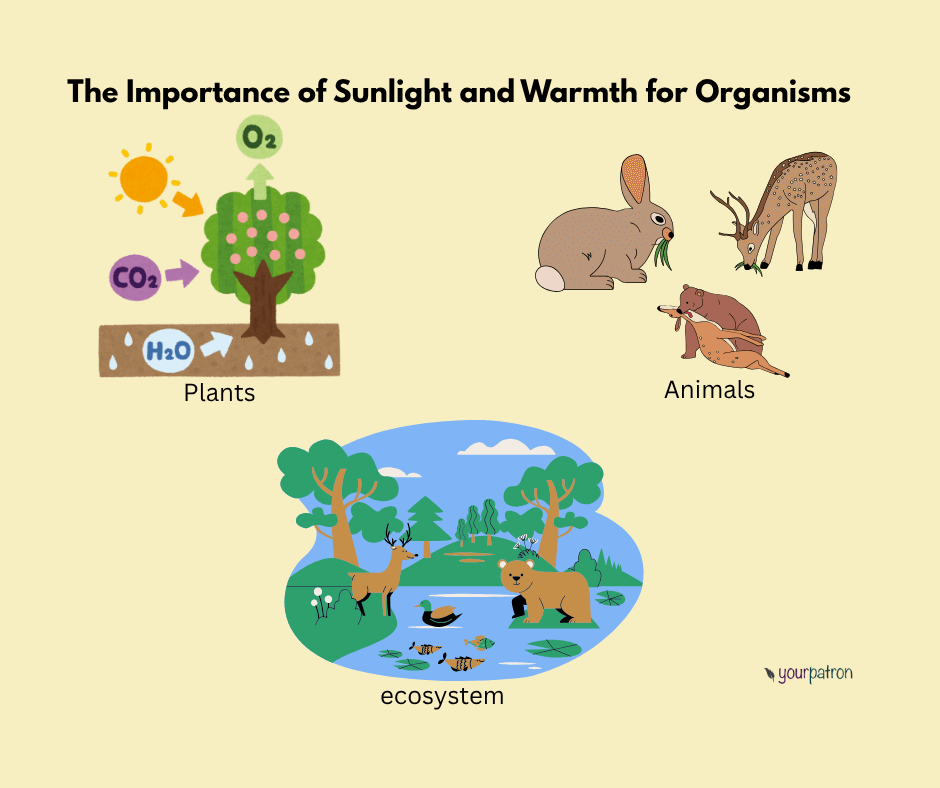
- Plants use sunlight for photosynthesis, the process by which they create food (sugars) from carbon dioxide and water.
- Sunlight determines the growth rate of plants. Areas with more sunlight (like tropical regions) often have dense vegetation, while areas with less sunlight (like the Arctic) have limited plant growth.
- Effect of Warmth:
- Warm temperatures help plants grow faster by enabling chemical reactions necessary for photosynthesis and other processes.
- Too much heat, however, can cause plants to dry out, while too little warmth can freeze and kill them.
2. Animals (Consumers)
- Importance:
- Animals depend on plants for food, either directly (herbivores) or indirectly (carnivores). Without sunlight, plants cannot grow, and the food chain would collapse.
- Sunlight helps regulate animal behavior, such as migration, reproduction, and daily activities (e.g., diurnal vs. nocturnal behavior).
- Effect of Warmth:
- Warmth helps cold-blooded animals (like reptiles) regulate their body temperature, as they rely on external heat.
- Mammals and birds use warmth to maintain their body temperature for survival in their habitats.
3. Ecosystems
- Importance of Sunlight:
- Sunlight affects the seasons, which influence the migration, hibernation, and breeding patterns of animals.
- It also affects the depth of aquatic ecosystems where photosynthesis can occur, determining the types of organisms that live there.
- Effect of Warmth:
- Warm climates support diverse ecosystems like rainforests and coral reefs.
- Cold climates limit biodiversity but are still home to unique organisms adapted to those conditions, like polar bears and penguins.
Extreme Examples
- Deserts: Excess sunlight and warmth create harsh conditions with limited water, so only specially adapted organisms like cacti and camels can survive.
- Polar Regions: Low sunlight and warmth restrict plant growth, so animals like seals and penguins depend on the ocean for food.
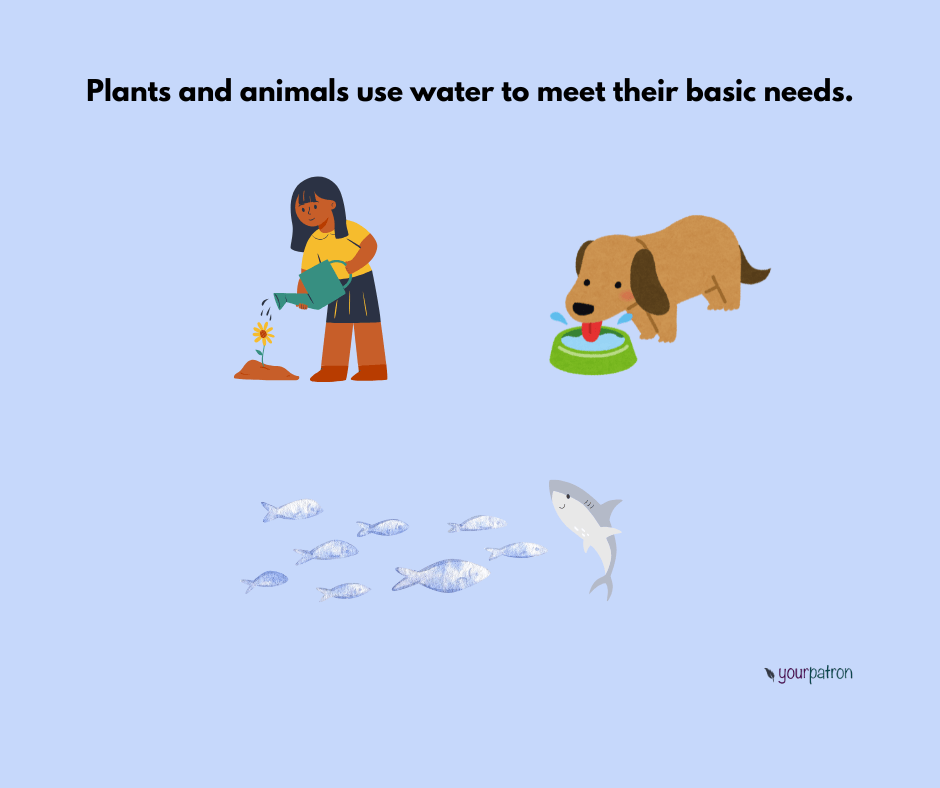
Water is essential for the survival of plants and animals.
Both rely on water for various basic functions, ensuring their growth, reproduction, and overall well-being. Here’s how:
Plants
Photosynthesis:
- Plants use water, sunlight, and carbon dioxide to produce food (sugar) and oxygen through photosynthesis.
- Without water, photosynthesis cannot occur, and plants cannot grow.
Nutrient Transport:
- Water helps dissolve minerals and nutrients in the soil, making it easier for plant roots to absorb them.
- It carries these nutrients to different parts of the plant through the stem.
Structure and Support:
- Water fills plant cells, keeping them firm. When plants lose too much water, they wilt.
- This internal pressure (turgor pressure) helps plants maintain their shape and stand upright.
Cooling:
- Plants release water vapor through tiny pores in their leaves (transpiration), cooling themselves on hot days.
Animals
Hydration:
- Animals drink water to stay hydrated, which is essential for maintaining bodily functions like digestion and temperature regulation.
- Some animals, like desert animals, get water from the food they eat (e.g., cactus fruits).
Digestion:
- Water helps break down food in the stomach and intestines, making nutrients available for absorption.
Transporting Nutrients and Oxygen:
- Blood, which is mostly water, transports oxygen and nutrients to cells and removes waste products.
Temperature Regulation:
- Animals sweat or pant to cool their bodies. These processes depend on water to evaporate and release heat.
Habitats:
- Water bodies like rivers, lakes, and oceans provide homes for countless species, from fish to amphibians.
Reproduction:
- Some animals, like frogs and fish, lay eggs in water, ensuring a safe environment for the young to develop.
Examples of Adaptations
Plants:
- Cacti store water in their stems to survive in dry deserts.
- Mangroves can grow in salty water, filtering salt to use fresh water for survival.
Animals:
- Camels store water in their bodies to survive long periods without drinking.
- Frogs absorb water through their skin, while some desert insects can collect dew to drink.
Plants and Animals in Various Bodies of Water
Different bodies of water—like oceans, rivers, lakes, and ponds—support diverse plants and animals, each adapted to their unique environment.
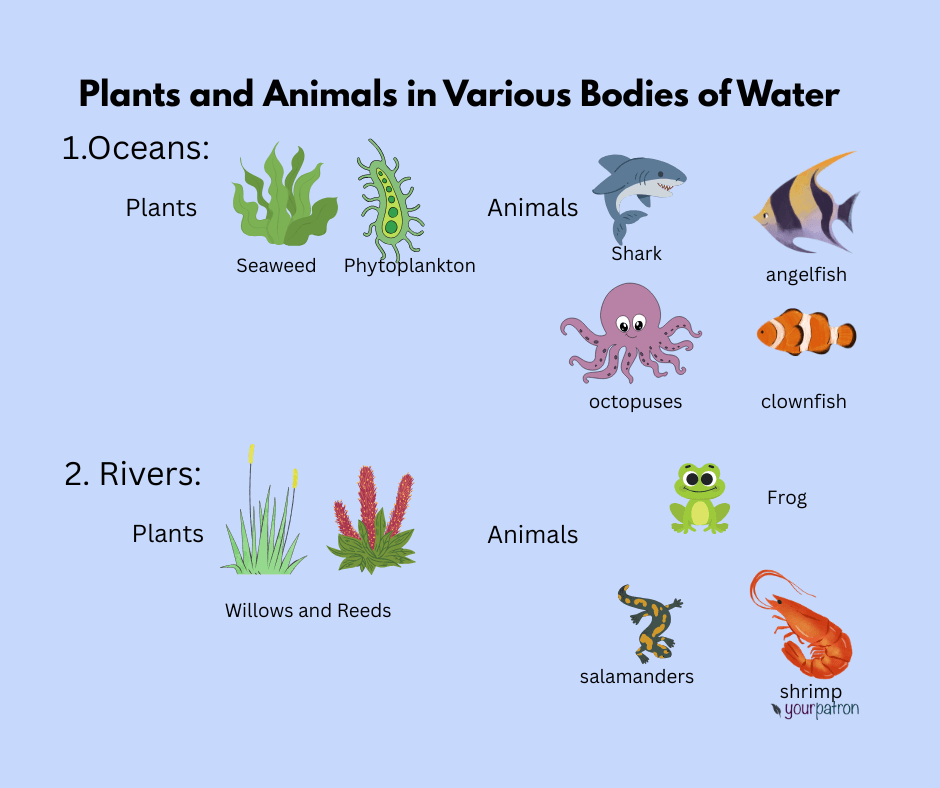
1. Oceans
Characteristics: Salty water, deep zones, and vast ecosystems.
- Plants:
- Seaweed and Kelp: Large algae that provide food and shelter for marine life.
- Phytoplankton: Microscopic plants that float near the surface and produce oxygen.
- Animals:
- Fish: Sharks, tuna, clownfish, and angelfish.
- Marine Mammals: Dolphins, whales, and seals.
- Invertebrates: Starfish, crabs, jellyfish, and octopuses.
- Coral: Technically animals, corals form reefs that house countless species.
2. Rivers
Characteristics: Flowing freshwater, varying speeds, and oxygen-rich.
- Plants:
- Willows and Reeds: Grow along riverbanks.
- Aquatic Plants: Water crowfoot and riverweed.
- Animals:
- Fish: Trout, salmon, and catfish.
- Amphibians: Frogs and salamanders.
- Birds: Kingfishers and herons.
- Invertebrates: Freshwater shrimp and dragonfly larvae.
3. Lakes and Ponds
Characteristics: Still freshwater, varying depths, and seasonal changes.
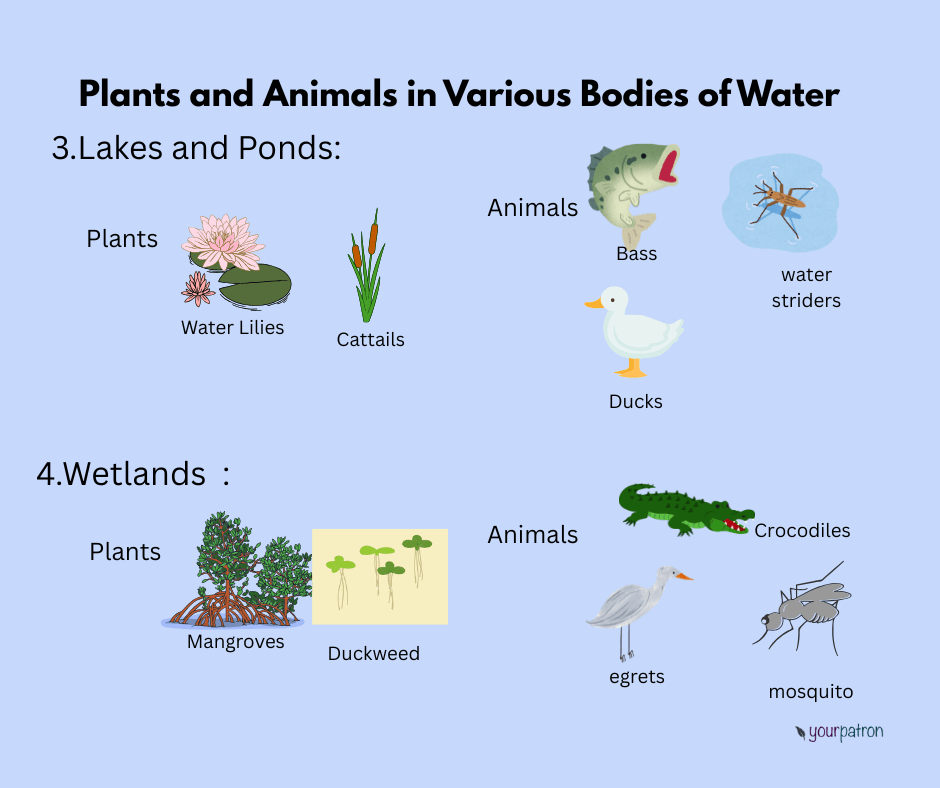
- Plants:
- Water Lilies: Float on the surface, with roots anchored in the mud.
- Cattails and Bulrushes: Grow along the edges.
- Animals:
- Fish: Bass, carp, and perch.
- Amphibians: Frogs and newts.
- Insects: Water striders and diving beetles.
- Birds: Ducks and swans.
4. Wetlands (Swamps, Marshes)
Characteristics: Waterlogged soil, both freshwater and brackish types.
- Plants:
- Mangroves: Trees that grow in salty or brackish water.
- Duckweed: Floating plants in stagnant water.
- Animals:
- Reptiles: Crocodiles and alligators.
- Birds: Storks and egrets.
- Invertebrates: Mosquito larvae and crayfish.
5. Polar Waters (Arctic and Antarctic)
Characteristics: Icy cold and nutrient-rich.
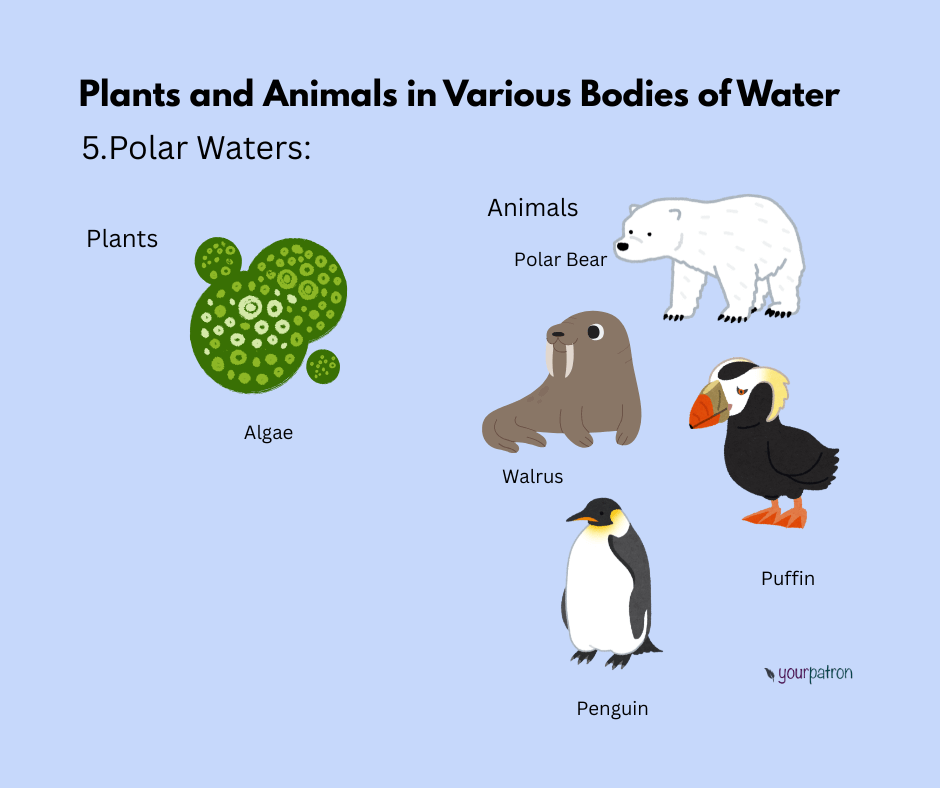
- Plants:
- Algae: Grow under sea ice.
- Animals:
- Fish: Arctic cod and icefish.
- Marine Mammals: Seals, walruses, and polar bears.
- Birds: Penguins in the Antarctic and puffins in the Arctic.
Natural Resources in Alberta and Their Use to Meet Human Needs
Alberta, a province in Canada, is rich in a variety of natural resources that are essential to human life and economic development. These resources are used for energy, manufacturing, agriculture, and other industries to support communities and create jobs. Let’s explore the key natural resources found in Alberta and how they are used.
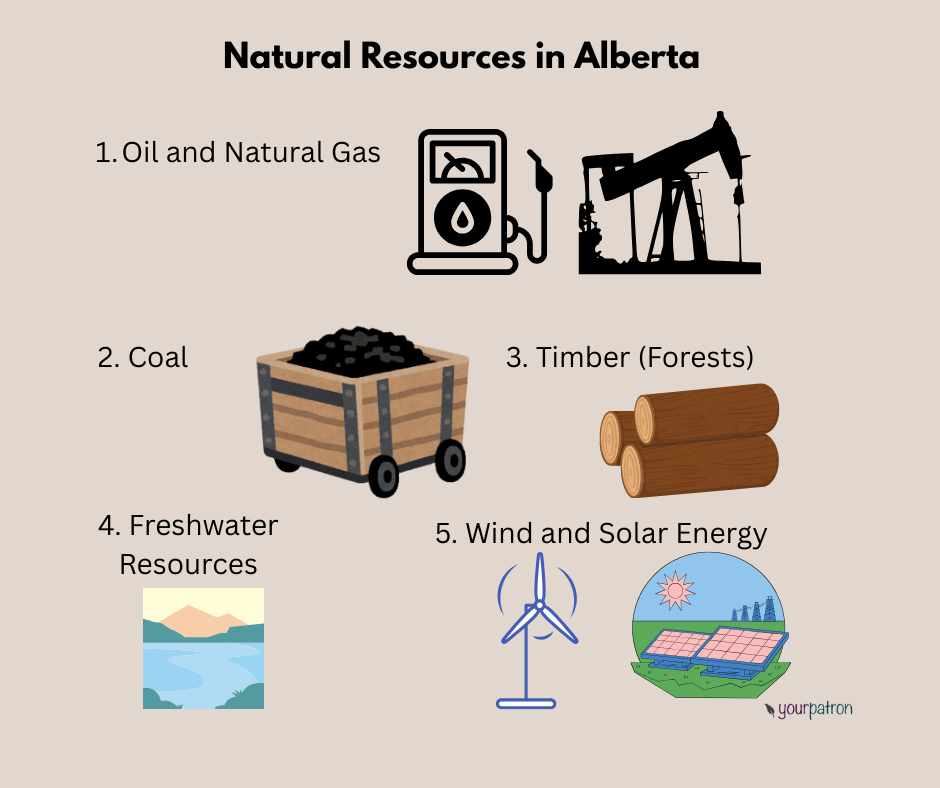
1. Oil and Natural Gas
Description:
- Alberta is home to vast deposits of oil and natural gas, including the oil sandsin the Athabasca region, which are among the largest oil reserves in the world.
- Natural gasis found primarily in the western part of the province.
Uses:
- Energy Production: Oil and gas are refined into fuels like gasoline, diesel, and natural gas for electricity generation, heating, and transportation.
- Manufacturing: They are also used to produce chemicals, plastics, and other industrial products.
- Economic Contribution: Alberta’s oil and gas industry is a major economic driver, providing jobs and supporting businesses across the province.
2. Coal
Description:
- Alberta has large coal deposits, particularly in the foothills and mountains of the Rocky Mountains.
Uses:
- Electricity Generation: Coal is primarily used in power plants to produce electricity.
- Steel Production: High-quality metallurgical coal is used in the production of steel, as it is essential for the blast furnace process.
- Industrial Uses: Coal is also used in the cement industry and other manufacturing processes.
3. Timber (Forests)
Description:
- Alberta has extensive forests, especially in the boreal region. These forests are primarily made up of coniferous trees like spruce, pine, and fir.
Uses:
- Lumber and Paper Products: Timber is harvested for construction materials, furniture, and paper products.
- Wildlife Habitat and Tourism: Forests also provide habitats for wildlife and are an important part of Alberta’s tourism industry, including hiking, camping, and other outdoor activities.
- Biomass: Wood products are sometimes used for bioenergy and heating.
4. Agriculture (Land and Water Resources)
Description:
- Alberta is a major agricultural producer, with fertile soils, particularly in the southern and central regions, and abundant water sources like the Bow and Red Deer Rivers.
Uses:
- Crops: Alberta grows wheat, barley, canola, and other grains that are vital for food production, both for local consumption and export.
- Livestock: The province is a major producer of beef and pork, and the agriculture industry supports dairy farming and poultry farming.
- Irrigation: Water from rivers is used to irrigate crops, especially in areas that don’t receive enough rainfall.
5. Freshwater Resources
Description:
- Alberta has many lakes, rivers, and underground aquifers, which are important sources of freshwater.
Uses:
- Drinking Water: Freshwater from lakes and rivers provides drinking water to communities.
- Agriculture: Water is also used for irrigation and livestock watering.
- Recreation and Tourism: Alberta’s lakes and rivers are popular for recreational activities like fishing, boating, and swimming.
6. Minerals (Other than Oil and Gas)
Description:
- Alberta is home to significant mineral deposits, including potash, salt, and various metals.
Uses:
- Potash: Used primarily in fertilizers to improve crop yields, supporting the agricultural industry.
- Salt: Mined for use in de-icing roads during the winter and in industrial processes.
- Other Metals: Alberta also has deposits of metals such as copper, zinc, and gold, which are used in various industries, including electronics and construction.
7. Wind and Solar Energy
Description:
- Alberta is one of Canada’s leading producers of renewable energy, with substantial wind and solar energy potential, particularly in the southern and central parts of the province.
Uses:
- Electricity Generation: Wind farms and solar power plants provide electricity, reducing dependence on fossil fuels and helping to meet environmental goals.
- Sustainable Energy: As part of Alberta’s push toward cleaner energy, wind and solar resources contribute to the province’s energy mix.
8. Wildlife and Fish
Description:
- Alberta has diverse wildlife, including bears, moose, elk, and a wide variety of bird species. Its rivers and lakes also support fish populations like trout, pike, and walleye.
Uses:
- Hunting and Fishing: Hunting and fishing are important recreational activities and sources of food for some communities.
- Tourism: Wildlife and fish contribute to Alberta’s eco-tourism, attracting tourists who visit the province to experience its natural beauty and wildlife.
Conclusion
Alberta’s natural resources—oil, gas, coal, timber, water, minerals, and wildlife—play a critical role in meeting human needs. These resources are used to generate energy, produce food, support industries, and provide recreational opportunities. However, managing these resources sustainably is key to ensuring their availability for future generations.
The Interconnectedness Between Human Use of Parks and Conservation Practices
Parks, whether natural reserves or urban green spaces, serve as vital areas for recreation, education, and environmental conservation. The way humans use these parks significantly influences conservation practices, and effective management of parks can ensure that their ecosystems are preserved while still meeting human needs. Here’s an exploration of this interconnectedness:
1. Parks as Recreation Spaces
Humans use parks for activities like hiking, picnicking, wildlife observation, and sports. These activities can have both positive and negative effects on conservation efforts.
Positive Impacts:
- Environmental Awareness: Spending time in parks helps people connect with nature, fostering a deeper appreciation for the environment.
- Community Engagement: Recreational use of parks often includes volunteer events like tree planting or cleanup drives, directly supporting conservation goals.
Challenges:
- Overuse of parks can lead to issues like soil erosion, littering, and habitat disruption.
- Activities like off-trail hiking or illegal fishing can harm ecosystems if not regulated.
Conservation Practices in Action:
- Trail Design and Maintenance: Creating designated trails reduces human impact on sensitive areas.
- Leave No Trace Principles: Education campaigns encourage visitors to minimize their environmental footprint by packing out all trash and respecting wildlife.
- Carrying Capacity Limits: Regulating the number of visitors in high-traffic parks to prevent overcrowding and overuse.
2. Parks as Conservation Areas
Many parks, particularly national and regional reserves, are designed to protect ecosystems and wildlife while allowing limited human interaction.
Conservation Goals in Parks:
- Protect endangered species and their habitats.
- Preserve water quality and prevent soil degradation.
- Serve as carbon sinks, mitigating climate change.
Balancing Human Use and Conservation:
- Ecotourism: Many parks use ecotourism as a way to fund conservation efforts. Visitors contribute to the park’s economy while learning about the importance of preserving biodiversity.
- Zoning: Parks often have zones for different purposes, such as wildlife sanctuaries, recreational areas, and educational spaces. This helps manage human activities without compromising conservation objectives.
3. Parks as Educational Tools
Parks play a crucial role in raising awareness about conservation. They host programs, guided tours, and informational exhibits to educate the public about biodiversity and sustainable practices.
Examples of Conservation Education:
- Wildlife viewing programs that teach visitors about local species and their roles in ecosystems.
- Hands-on workshops, such as tree planting, invasive species removal, or water quality testing.
- Public awareness campaigns about climate change and the importance of preserving natural areas.
4. Urban Parks and Conservation
Urban parks, though human-made, are critical for conservation within cities. They provide green spaces that help maintain biodiversity and mitigate urban environmental challenges.
Human Benefits:
- Parks improve air quality, reduce the urban heat island effect, and offer spaces for physical activity and mental health benefits.
- They promote sustainable lifestyles by hosting farmers’ markets, recycling drives, and community gardens.
Conservation Practices in Urban Parks:
- Native Plant Landscaping: Urban parks often feature native plants that require less water and provide habitats for local species.
- Stormwater Management: Parks can include features like rain gardens and retention ponds to manage runoff and prevent flooding.
- Wildlife Corridors: Parks can act as stepping stones for wildlife, connecting fragmented habitats in urban areas.
5. Challenges to Balancing Human Use and Conservation
- Overcrowding: Popular parks can suffer from overuse, leading to damage to ecosystems.
- Pollution: Litter, noise, and water pollution from human activities can harm wildlife.
- Invasive Species: Humans inadvertently introduce invasive species to parks, threatening native biodiversity.
Solutions:
- Use technology, such as apps or online platforms, to track visitor numbers and guide people to less crowded areas.
- Employ park rangers to enforce rules, educate visitors, and manage conservation efforts.
- Regularly monitor and restore habitats impacted by human use.
Conclusion
The relationship between human use of parks and conservation practices is deeply interconnected. Parks provide essential services to humans, from recreation to mental health benefits, but their health depends on responsible human behavior and proactive conservation management. By balancing use and protection, parks can continue to serve as refuges for biodiversity and spaces for human enrichment.